Turning Purpose Into Action
The first step was the Atlantic. A solo crossing that would test endurance, resilience, and mental strength at every level.
Taming the Kraken
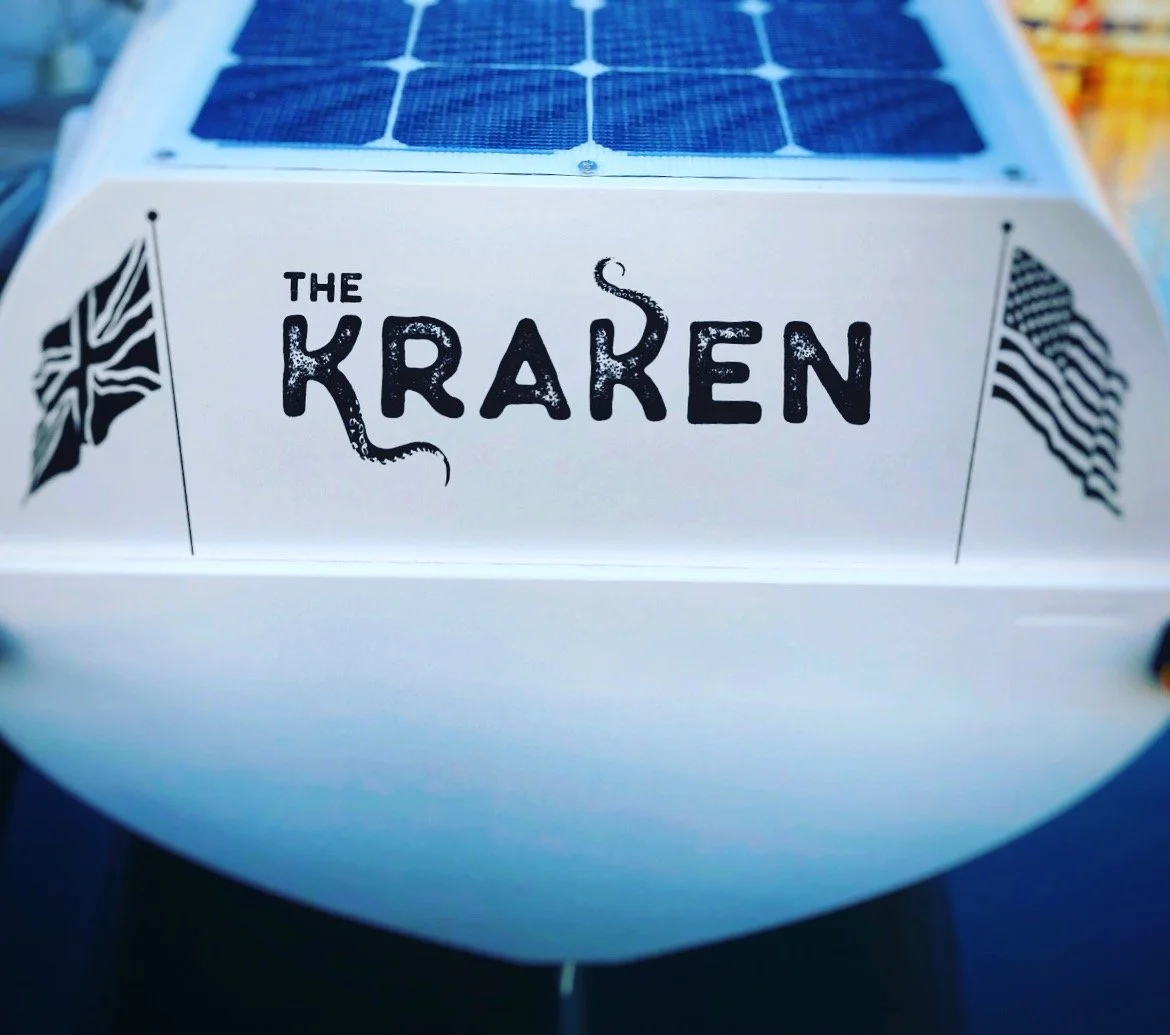
The name Tame the Kraken comes from a legend.
In Norse mythology, the Kraken is a powerful sea creature—feared for its immense strength, capable of dragging ships and sailors beneath the surface. But beyond the myth, it represents something deeper: not just physical power, but the ability to endure, regenerate, and rise again after damage.
That symbolism is intentional.
For many veterans and individuals facing trauma, the struggle with mental health can feel just as overwhelming—unpredictable, isolating, and at times impossible to overcome. The Kraken represents those battles. But more importantly, it represents the strength within to face them.
The boat itself was named The Kraken as a reminder of that reality.
Just as the legend tells of the Kraken’s ability to regenerate and grow back what was lost, the journey became a reflection of recovery—that even after the most difficult chapters, growth is still possible. That strength is not just about surviving, but about continuing forward.
And in that way, the Atlantic crossing was never just about taming the ocean. It was about confronting something far greater—and proving that it can be faced.
The Start of Something Big
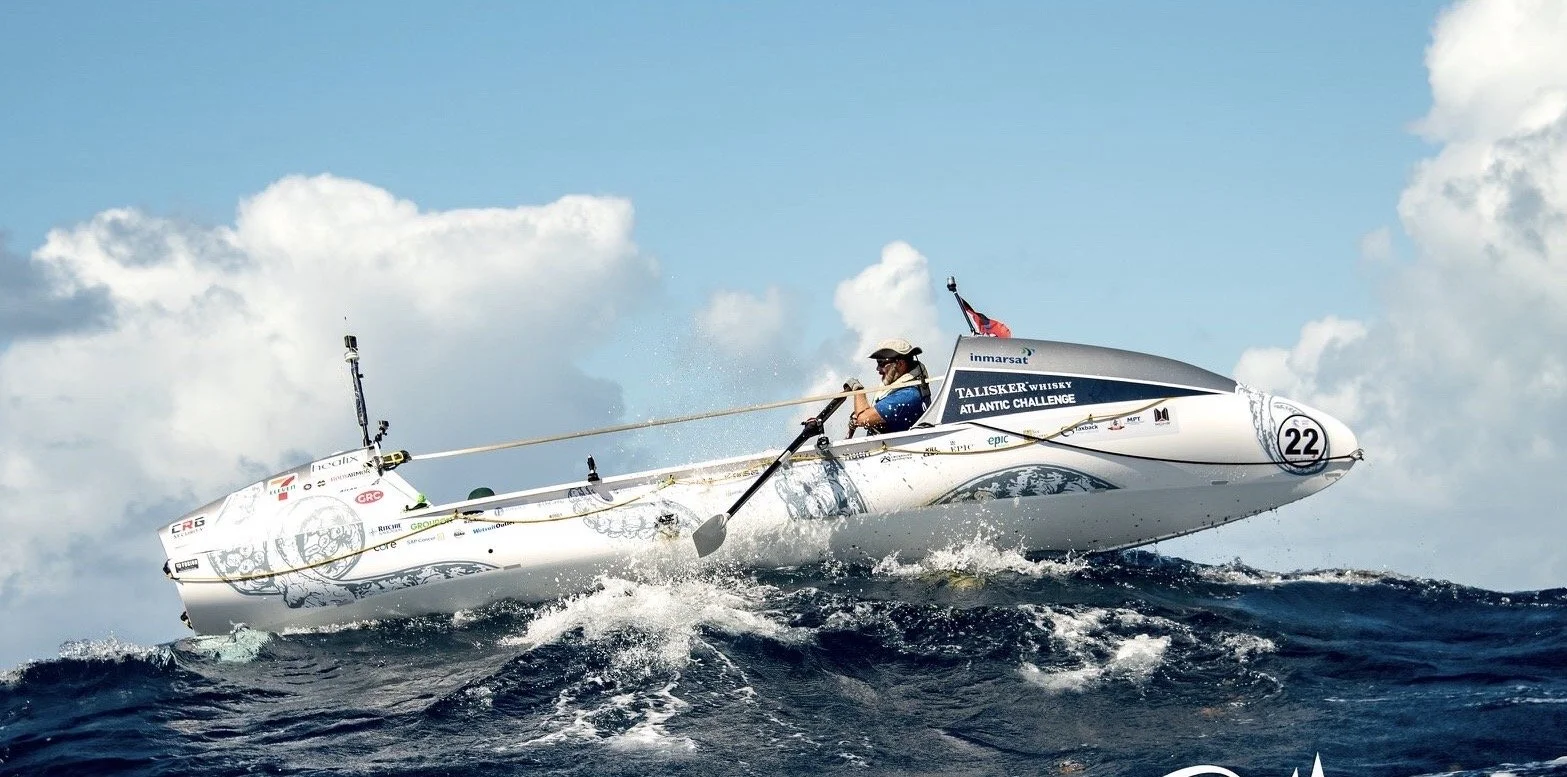
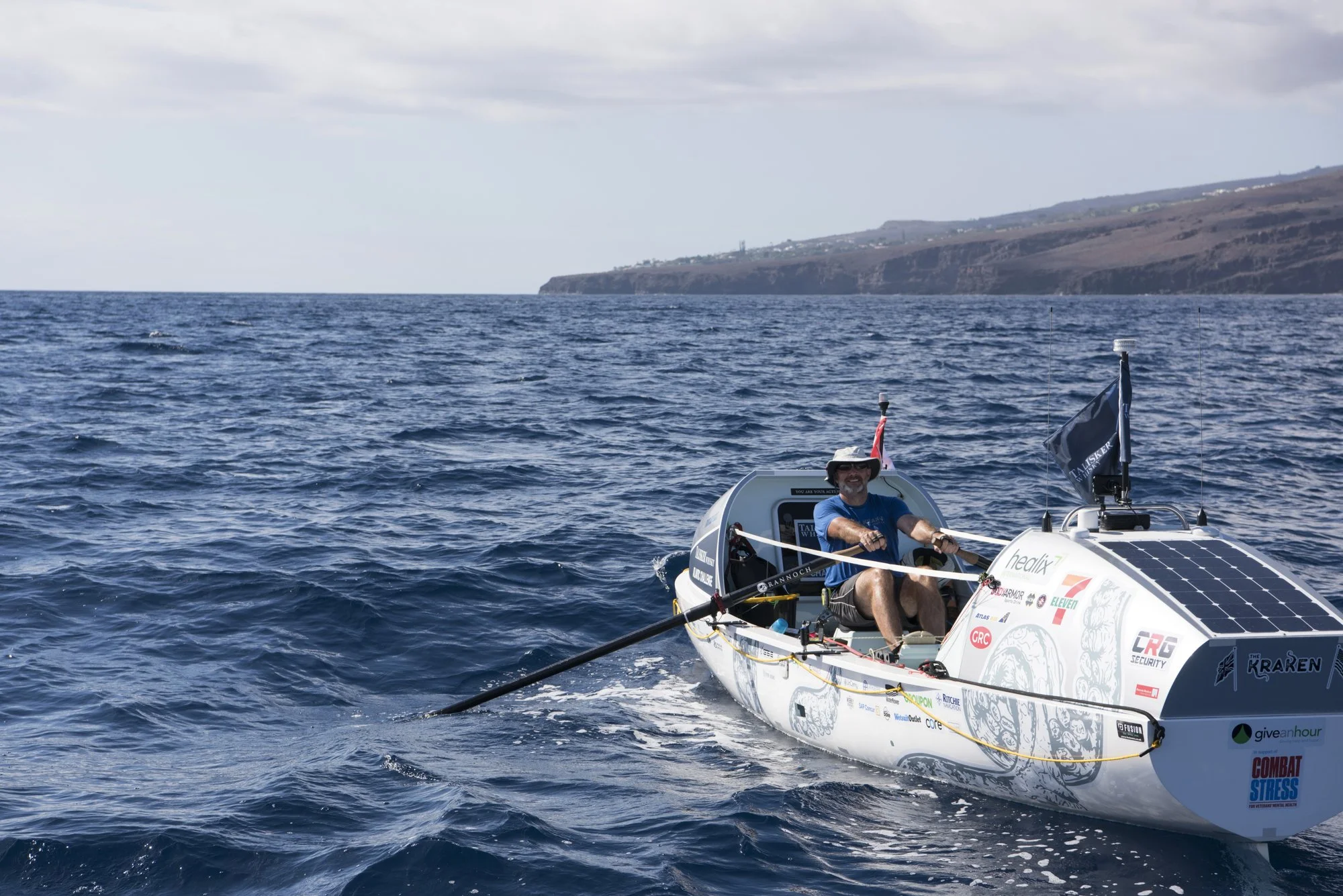
Setting out from La Gomera in the Canary Islands, the journey meant rowing solo more than 3,000 nautical miles west to Antigua—unsupported, unassisted, and entirely self-reliant. Once clear of the harbor, there was no turning back. The vastness of the ocean quickly replaces any sense of control, and what remains is discipline, endurance, and mindset.
Every element of survival depended on preparation and resilience. Solar panels powered critical systems—communications, navigation, and safety beacons—while a small onboard water maker converted seawater into drinking water. Beyond that, everything came down to the individual. Every mile was earned through repetition: two-hour rowing shifts, day and night, navigating fatigue, sleep deprivation, blisters, salt sores, and the constant uncertainty of the open ocean.
The Talisker Whisky Atlantic Challenge is widely regarded as one of the toughest endurance events in the world. Fewer people have rowed the Atlantic solo than have summited Mount Everest without supplemental oxygen. But the difficulty wasn’t the point—it was the vehicle.
Because out there, stripped of distraction and comfort, clarity emerges. The mission became sharper with every stroke: to honor a friend lost, to raise awareness of veteran mental health, and to prove that even in the most unforgiving environments, purpose can carry you forward.
The Finish Line, but Not the End.
After 63 days, 2 hours, and 32 minutes at sea, the journey finally came to an end.
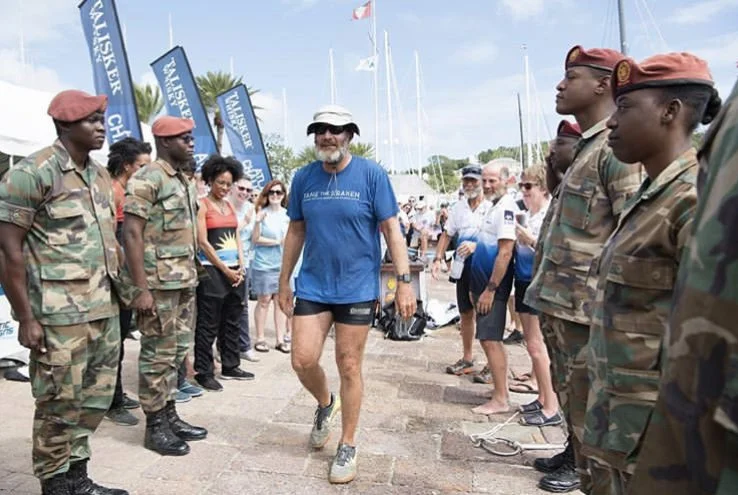
Crossing the finish line into Nelson’s Dockyard in Antigua, the isolation of the ocean gave way to something very different—family, friends, fellow rowers, and supporters waiting onshore. What had been a solitary battle for weeks suddenly became a shared moment.
Stepping off the boat, the toll of the Atlantic was clear. Physically drained, worn down by relentless exposure to the elements, and carrying every mile of the journey in his body, Tim had pushed himself to the limit.
But the mission wasn’t finished. - If anything, it had just begun.
Because the crossing had proven something important—this wasn’t just a personal challenge. It had created a platform, a voice, and an opportunity to do more. To reach further. To turn one story into something that could help others facing their own battles.
The ocean had tested everything—but it had also revealed what was possible when purpose leads the way.
And with that realization came the next question: what comes next?